

Insights
Function of Fuel Injector in Diesel Engine: Why Ships Depend


A vessel’s diesel engine can run for days without a break, and every combustion stroke starts with a precise dose of fuel arriving at exactly the right moment. That job belongs to the injector. When it slips, the effects show up quickly in power, fuel bills and exhaust smoke, and at sea there is rarely a workshop nearby.
This guide explains the function of fuel injector in diesel engine operation and why marine conditions push injectors harder than land-based duty. It also covers the sensors that keep injection on target, and what you can do to keep both in service.
Function of Fuel Injector in Diesel Engine: The Basics
A diesel engine does not use a spark plug for ignition. Instead, it relies on air being compressed until it becomes hot enough to ignite the fuel when it is injected. Put simply, the function of fuel injector in diesel engine combustion is to deliver fuel as a fine spray, in the right amount and at the right time.
How Does a Diesel Fuel Injector Work?
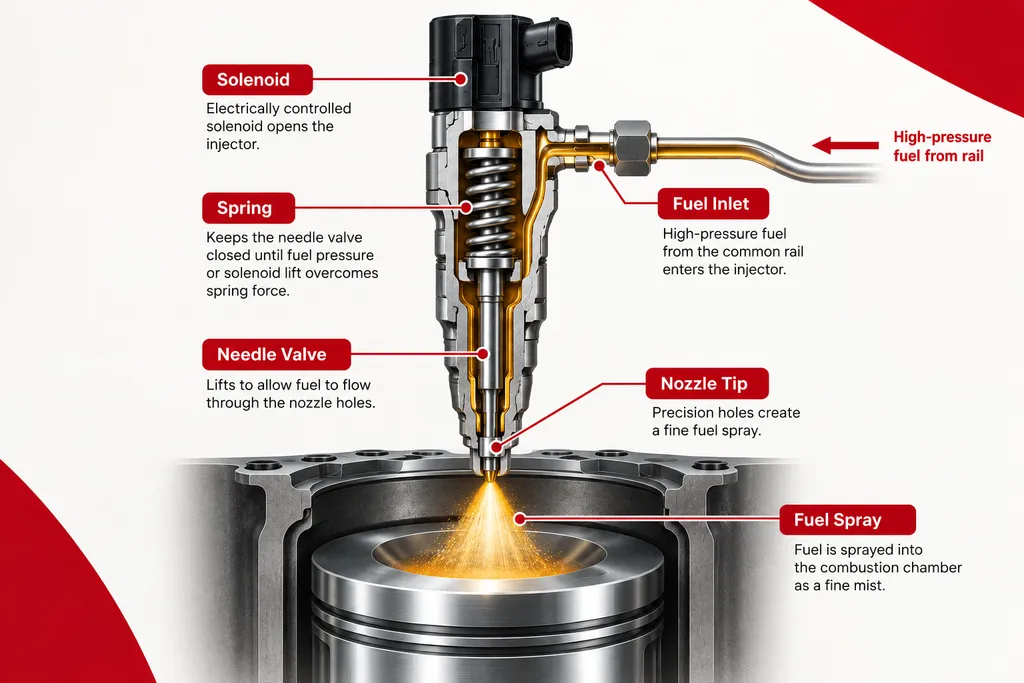
Fuel reaches the injector at high pressure from an injection pump or, in modern systems, a common rail. Inside the injector, a needle valve keeps the nozzle closed until injection is required. In mechanical injectors, fuel pressure causes the needle to open once a set pressure is reached. In electronic common-rail systems, the engine control unit controls a solenoid or other actuator that regulates the injection process.
When the needle opens, high-pressure fuel passes through tiny holes in the nozzle tip and is sprayed into the combustion chamber, where it mixes with the hot compressed air and ignites.
Cummins explains that well-designed injectors help an engine produce full power while keeping fuel use and emissions down.
Metering and Timing Each Injection
Metering decides how much fuel enters the cylinder. Fuel quantity depends mainly on injection pressure, nozzle characteristics and how long the injector stays open. Timing decides when that fuel arrives, with the main injection generally starting near the end of the compression stroke.
Inject too early and combustion pressure can rise too soon, adding stress and noise. Inject too late and more fuel burns as the piston moves down, reducing efficiency and potentially increasing exhaust temperature and smoke. Common-rail systems can also split delivery into several short injections per cycle for smoother combustion and better emissions control.
Atomising Fuel for Clean Combustion
Diesel fuel needs to be broken into fine droplets so it can evaporate and mix quickly with hot compressed air. The size of the nozzle holes and the injection pressure help determine how effectively the fuel is atomised. A clean, even spray pattern supports efficient combustion, while a worn or partly blocked nozzle can disrupt the spray, causing poor fuel-air mixing and potentially increasing soot and black smoke.
Why Marine Diesel Fuel Injectors Work Harder at Sea
A truck engine may idle in traffic and rest overnight. A vessel’s main engine or generator, however, can run for long stretches under demanding conditions, with prolonged heat exposure and varying fuel quality adding to injector wear. A 2023 study published in Polish Maritime Research identifies clogged nozzle holes, worn needle valves and reduced opening pressure as common injector faults under harsh marine operating conditions.
Long Running Hours Under Heavy Load
Propulsion engines on tugs and supply vessels can operate under sustained loads for hours, while generators may run continuously to keep the ship powered. Prolonged operation exposes the injector nozzle and needle to repeated mechanical stress and high temperatures. Over thousands of running hours, even small changes in spray pattern or fuel delivery can affect combustion efficiency and accelerate engine wear.
Salt, Humidity and Corrosion
Salt-laden air can enter the engine room through ventilation and settle on exposed surfaces, contributing to corrosion of electrical connectors, wiring and metal components. Temperature changes and humid air can also cause condensation inside fuel tanks, allowing water to accumulate. If that water enters the fuel system, it can interfere with lubrication, promote internal corrosion and damage precision injector components.
Variable Fuel Quality and Contamination
Ships take on fuel from different suppliers and ports, so fuel properties and quality can vary between deliveries. Since the IMO 2020 sulphur limit reduced the maximum sulphur content of marine fuel oil used outside emission control areas to 0.50%, many ships have adopted very low sulphur fuel oils, including blended formulations with varying characteristics.
Particles and water can damage injectors if fuel treatment and filtration are inadequate. Microbial growth, particularly where water accumulates in fuel tanks, can also produce sludge that blocks filters and fuel lines. Properly maintained fuel separators and filters help protect the precision components of the injection system
How Marine Engine Sensors Keep Injection Accurate
On an electronically controlled engine, the injector only acts on instructions. Marine engine sensors measure what is happening in the fuel system and the engine, and the control unit uses those readings to calculate every injection. For a wider look at the role of sensors in heavy-duty engines, see our earlier guide.
Pressure and Temperature Readings
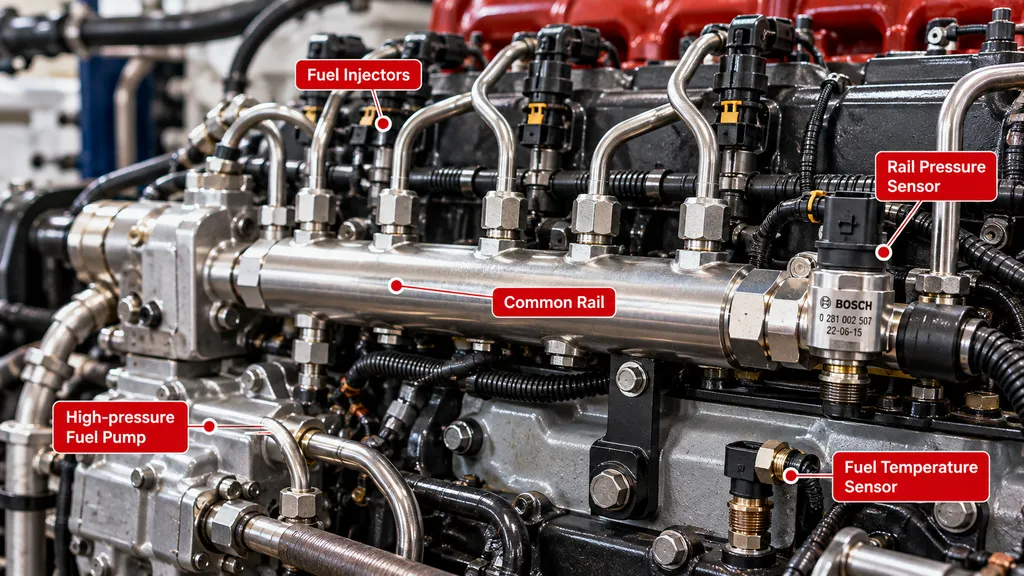
Injection quantity depends heavily on fuel pressure, so common rail engines monitor it constantly. Bosch notes that a rail pressure sensor is always fitted to its high-pressure rails, which run more than 60,000 pressure checks per minute to regulate injection.
Fuel temperature matters too. Warmer fuel is thinner and less dense, which changes how much fuel passes through the nozzle in a given time. Fuel temperature sensors let the control unit correct for that.
Engine Speed and Crankshaft Position
To time each injection, the control unit needs to know the position of the pistons. A crankshaft position sensor tracks engine speed and crank angle, while a camshaft sensor helps identify which cylinder is on its compression stroke. If either signal is lost or distorted, the engine may experience incorrect injection timing, rough running, starting difficulties or stalling, depending on the system.
Mechanical Versus Electronically Controlled Engines
Not every vessel uses electronic injection. Many older mechanical systems use a cam-driven injection pump and governor to control fuel delivery, while the injector opens when fuel pressure overcomes its spring. With little or no electronic control involved, accurate injection depends on correct pump timing and nozzle opening pressure.
Electronically controlled engines, including Cummins common-rail models, use sensor readings and an engine control unit to adjust injection timing and fuel quantity according to operating conditions. The function of fuel injector in diesel engine operation remains the same in both systems. What changes is how fuel delivery is controlled.
Keeping Injectors and Sensors in Service
Early Warning Signs
Injector and sensor faults rarely appear without warning. Watch for rough running, rising fuel consumption for the same load, extra exhaust smoke, harder starts and uneven exhaust temperatures between cylinders. Stored fault codes on electronic engines can point to a specific injector or sensor circuit. For a fuller checklist, see our guide to diesel fuel injector wear symptoms.
Reconditioning Versus Replacement
A worn injector does not always need replacing. A specialist with the right test equipment can often clean, test and recondition injectors, provided wear remains within the manufacturer’s limits. However, proper tooling and technical expertise are essential, as incorrect servicing can affect injection performance. When the needle, seat or injector body is worn beyond tolerance, or a common-rail injector cannot meet manufacturer specifications after servicing, replacement is the safer choice.
Sourcing Genuine Bosch and Cummins Parts
Injectors and sensors are built to tight tolerances and calibrated for specific engines. A part that fits but does not match the original specification can upset metering, timing or sensor readings.
Ritchmen has supplied genuine Cummins diesel engine parts and Bosch fuel injection parts since 1976, and can help identify the right part for your engine model. You can browse wide range of diesel fuel injection parts or contact the team with your engine details.
Conclusion
Diesel engines at sea work longer and in harsher conditions than most land-based engines, and every cylinder depends on its injector to deliver fuel cleanly and on time. Understanding the function of fuel injector in diesel engine operation makes problems easier to spot early, and shows why marine engine sensors matter just as much on electronic engines. Clean fuel, good filtration, timely checks and genuine replacement parts keep both doing their jobs, so the vessel stays available when you need it.
FAQs
What does a fuel injector do in a diesel engine?
It sprays a measured amount of fuel into the cylinder at high pressure and at a precise moment, as a fine mist that ignites in the hot compressed air. The short answer to ‘how does a diesel fuel injector work?’ is that fuel pressure or a solenoid lifts a needle valve, forcing fuel through tiny nozzle holes.
What is the difference between a fuel injector and a fuel injection pump?
The pump raises fuel to injection pressure, while the injector delivers that fuel into the cylinder. In common rail systems, the pump feeds a shared rail that supplies every injector. In unit injector systems, pumping and injection happen in one component on each cylinder.
Can a faulty sensor affect fuel injector performance?
Yes. On electronically controlled engines, the control unit sets injection timing and quantity from sensor readings. A sensor that drifts or fails can make the injector deliver the wrong amount of fuel or fire at the wrong time, even when the injector itself is in good condition.
Can a vessel keep running with one faulty injector?
Some engines may continue running, but doing so can cause further damage. A leaking injector can overheat the piston crown and damage combustion components. Follow the manufacturer’s guidance and arrange inspection as soon as it is safe, stopping the engine if required.