

Insights
The Importance of Sensors in Heavy-Duty Engines: The Role of Bosch Automotive Sensors

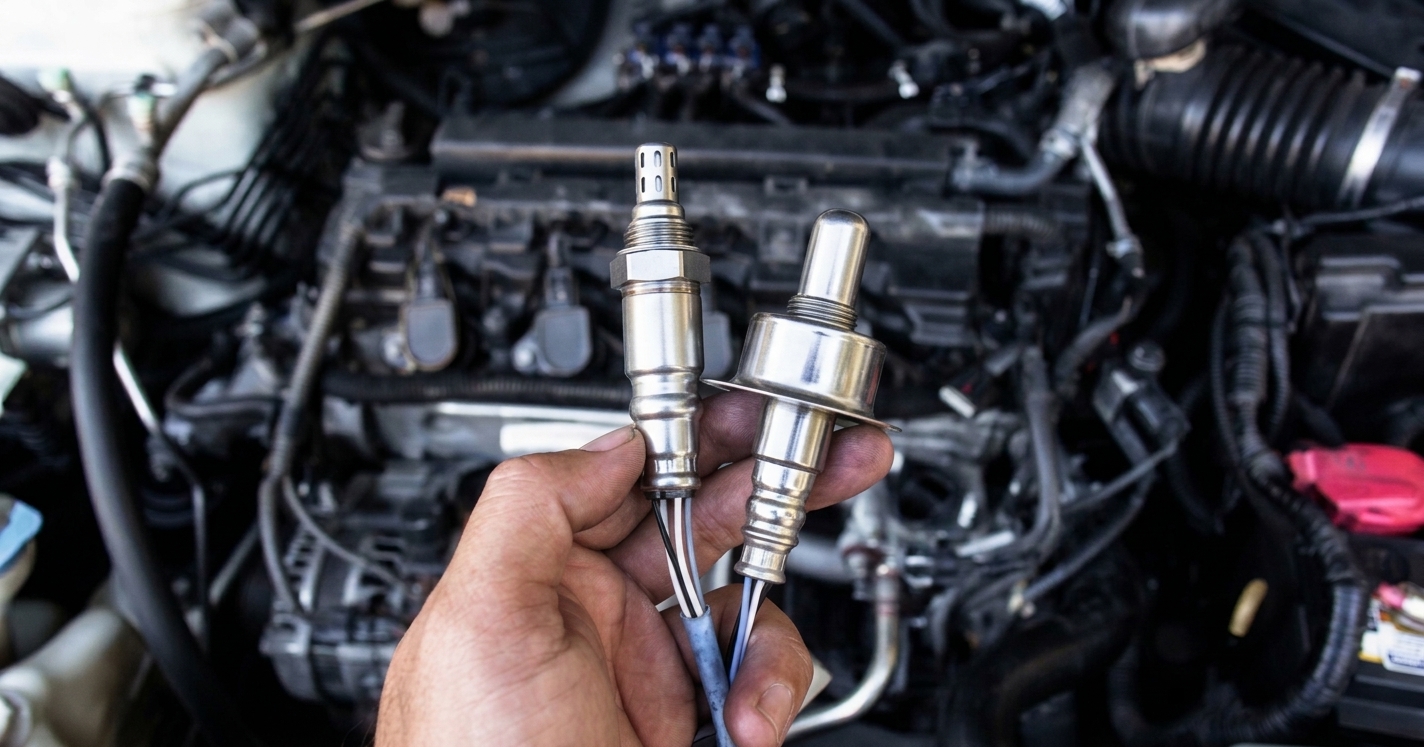
Table of Contents
Heavy-duty engines operate under demanding conditions, including high loads, long running hours, vibration, heat and changing environmental conditions. To maintain stable performance under these conditions, the engine requires continuous, accurate information about its internal operating state.
Sensors provide this information, helping the engine control unit (ECU) monitor these conditions and adjust engine operation accordingly, which reflects the importance of sensors in heavy-duty engines. By supplying accurate information, sensors support fuel efficiency, diesel engine performance, emissions control and fault diagnosis.
How Sensors Work in Heavy-Duty Engines
Sensors measure specific operating conditions and convert them into electrical signals. The ECU then analyses these signals alongside information from other engine components. Based on this data, it can adjust fuel injection, air management, exhaust-gas treatment and other functions.
For example, a fuel-pressure sensor may detect changes in pressure within the fuel system. The ECU uses this kind of signal, along with data from other sensors, to adjust functions such as fuel delivery in real time. Sensor data may be transmitted as an analogue signal or through a digital communication system such as SENT or CAN, depending on the sensor and vehicle design.
Why Sensors Are Important for Engine Performance
Supporting fuel-injection control
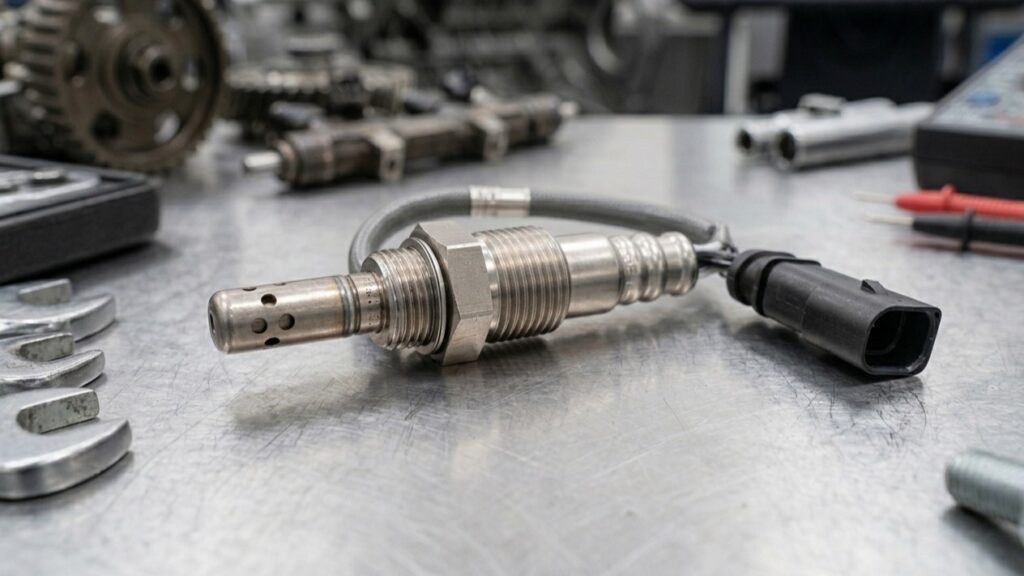
Diesel fuel injection must be carefully controlled to support efficient combustion. The ECU uses sensor data to decide how much fuel to inject and when. In some systems, it also checks whether fuel pressure stays within the expected range.
Sensors that may contribute to this process include:
- Fuel-pressure sensors
- Fuel-temperature sensors
- Crankshaft and camshaft position sensors
- Intake-air pressure or boost-pressure sensors
- Air-mass meters
Fuel properties can change with temperature. Warmer diesel may become less dense, while colder fuel may flow differently through the system. Accurate fuel-temperature data helps the ECU account for changing conditions when managing fuel delivery.
Pressure measurements are also important. Pressure sensors support control of the amount of fuel supplied by the pump, helping to maintain stable injection across different loads and speeds.
Monitoring temperature and pressure
Heavy-duty engines generate substantial heat and operate under significant mechanical and hydraulic loads. Temperature and pressure sensors help monitor areas such as:
- Coolant and engine temperature
- Oil pressure
- Intake-manifold and boost pressure
- Exhaust-gas temperature
- Differential pressure across the diesel particulate filter (DPF)
The ECU can use this information to adjust engine operation or activate a warning when readings move outside the expected range. Monitoring may also help protect components such as the turbocharger, fuel system, catalytic converter and DPF.
A boost-pressure sensor, for example, measures pressure and temperature in the intake system. This information helps the engine management system coordinate air supply and fuel injection.
Supporting emissions management
Modern heavy-duty diesel engines use several systems to limit pollutants. Sensors provide feedback that helps these systems work within their intended operating conditions.
Common applications include:
- NOx monitoring for selective catalytic reduction (SCR) systems
- Particulate-matter detection
- Oxygen or lambda measurement in applicable engine systems
NOx sensors measure nitrogen oxides and oxygen in the exhaust stream. In diesel applications, their signals can help control the quantity of urea solution, such as AdBlue, injected into an SCR system. They can also support on-board emissions monitoring and diagnostics. These sensors are used in 12-volt and 24-volt applications, including light and heavy commercial vehicles used on-road and off-highway.
Helping with diagnostics and maintenance
Sensors can help identify developing problems before they result in major engine damage or extended downtime. When a reading is implausible or falls outside the expected range, the ECU may store a diagnostic trouble code or activate a warning message.
However, a fault code does not always prove that the sensor itself has failed. Similar symptoms may be caused by:
- Damaged wiring or corroded connectors
- Poor electrical grounding
- Contaminated fuel
- Blocked filters
- Air leaks
- Fuel-pressure problems
- Exhaust leaks
- Faults in the component being monitored
For this reason, diagnosis should include the sensor, wiring, connectors and related engine systems. Replacing a sensor without confirming the cause may not resolve the problem.
Common Sensors Used in Heavy-Duty Engines
Heavy-duty engines may use a combination of engine-management and exhaust-treatment sensors. The exact arrangement depends on the engine design, fuel system, vehicle application and emissions standard.
| Sensor | Main function |
| Fuel-pressure sensor | Measures fuel pressure to support fuel-system and pump control |
| Fuel-temperature sensor | Measures fuel temperature so the ECU can account for changes in fuel behaviour |
| Oil-pressure sensor | Monitors engine or transmission oil pressure |
| Coolant-temperature sensor | Measures coolant or engine temperature for engine management and protection |
| Crankshaft position sensor | Helps determine crankshaft speed and position |
| Camshaft position sensor | Provides camshaft-position information for engine-management functions |
| Boost-pressure sensor | Measures intake-manifold or turbocharger boost pressure |
| Air-mass meter | Measures the mass of air entering the engine to support combustion control |
| Exhaust-gas temperature sensor | Monitors exhaust temperature and helps protect after-treatment components |
| Differential-pressure sensor | Measures pressure differences across components such as the DPF |
| NOx sensor | Measures nitrogen oxides in the exhaust and supports SCR control and emissions monitoring |
| Particulate-matter sensor | Helps monitor the performance of the DPF and particulate emissions system |
| Lambda sensor | Measures residual oxygen in exhaust gas in applications that use oxygen-based combustion control |
The Role of Bosch Automotive Sensors
Bosch sensors for fuel-system monitoring
These Bosch sensors can help monitor the conditions required for accurate fuel delivery. These sensors include:
- Fuel-pressure sensors
- Oil-pressure sensors
- Temperature sensors for fuel, oil or coolant
- Medium-pressure sensors with optional temperature measurement
- Intake-manifold and boost-pressure sensors
Bosch’s medium-pressure sensor measures fuel or oil pressure using a silicon membrane and resistance bridge. Depending on the version, it sends pressure and temperature data as either an analogue or SENT signal.
Temperature sensors also help the ECU understand how operating conditions may affect fuel, oil or coolant. Bosch states that its temperature-sensor range can measure different fluid media, including water, fuel and oil, across a wide range of vehicle applications.
Bosch sensors for exhaust-gas monitoring
Exhaust-gas sensors are important for controlling and checking after-treatment systems. This range includes:
- NOx sensors
- Exhaust-gas temperature sensors
- Differential-pressure sensors
- Particulate-matter sensors
- Lambda sensors
An exhaust-gas temperature sensor can help monitor the temperature around components such as the turbocharger, catalytic converter and DPF. A differential-pressure sensor measures the pressure difference between two points, which can help the engine system assess the condition or loading of a particulate filter.
Bosch describes its particulate-matter sensor as a component for monitoring DPF function in passenger cars and commercial vehicles.
Bosch’s NOx sensor system includes a probe and sensor control unit connected by a wiring harness and can communicate with the engine-management system through the CAN bus.
Selecting the Correct Bosch Sensor

Details to verify before ordering
Before ordering any Bosch sensor technology, verify:
- The Bosch part number
- The original equipment manufacturer (OEM) part number
- The engine model and variant
- The vehicle or equipment model
- The engine serial number, where applicable
- The connector type and pin configuration
- The thread size, mounting arrangement or hydraulic interface
- The sensor’s pressure and temperature range
- The voltage and communication requirements
- The sensor location and cable length
- Whether the application uses a 12-volt or 24-volt electrical system
- Whether the sensor is intended for an on-road, off-highway, marine, generator or industrial application
To confirm all of this, use OEM service manual, or a supplier with access to reliable fitment data. This is particularly important for commercial vehicles and industrial engines, where similar-looking sensors may have different calibration or connector specifications.
Why correct part matching matters
The ECU does not simply recognise a sensor by its physical shape. It interprets the signal according to a defined electrical and calibration profile. A sensor with the wrong resistance curve, pressure range, signal type or calibration may produce readings that appear plausible but are not accurate enough for correct engine control.
Incorrect matching may contribute to:
- Warning lights or diagnostic fault codes
- Poor starting or uneven running
- Incorrect fuel delivery
- Reduced fuel economy
- Increased smoke or emissions
- Inaccurate DPF or SCR monitoring
- Unnecessary replacement of functioning components
- Vehicle or equipment downtime
Correct installation also matters. Technicians should inspect the wiring and connector, follow the manufacturer’s tightening and installation instructions, and check for leaks or contamination where the sensor is fitted to a fuel, oil, coolant or exhaust system.
Conclusion
Sensors act as the information network of a heavy-duty engine, highlighting the importance of sensors in heavy-duty engines. By measuring fuel pressure, temperature, air, engine position and exhaust conditions, they give the ECU what it needs to manage combustion, protect components, control emissions and support diesel engine performance. Bosch sensor technology covers fuel-system monitoring, boost-pressure measurement, exhaust-gas monitoring, DPF assessment and NOx control but only when correctly matched to the engine. Confirm the part number, OEM reference and specifications before ordering such as correct fitment and installation reduce downtime and keep the engine running reliably.
FAQs
Does a diagnostic trouble code always mean the sensor has failed?
Not necessarily. A fault code can also be caused by damaged wiring, corroded connectors, poor grounding, contaminated fuel, blocked filters, air or exhaust leaks, or a fault in the component being monitored, not just the sensor itself.
Why is fuel-temperature data important for diesel engines?
Diesel becomes less dense when warm and flows differently when cold, so the ECU uses fuel-temperature readings to adjust fuel delivery and maintain consistent combustion across changing conditions.
Can two similar-looking sensors have different specifications?
Yes. Especially in commercial vehicles and industrial engines, sensors that look identical can have different calibration profiles or connector configurations, so fitment should always be confirmed against a parts catalogue or OEM manual.
What happens if the wrong sensor is installed?
An incorrectly matched sensor may produce readings that look plausible but aren’t accurate enough for proper engine control, potentially causing poor running, incorrect fuel delivery, higher emissions, inaccurate DPF/SCR monitoring, or unnecessary part replacement.
Do all heavy-duty engines use the same sensors?
No. Sensor types and configurations vary depending on the engine design, fuel-injection system, emissions standard and vehicle or equipment application.