

Insights
Why Fuel Temperature Sensors Are Critical for Diesel Engine Stability in Extreme Conditions

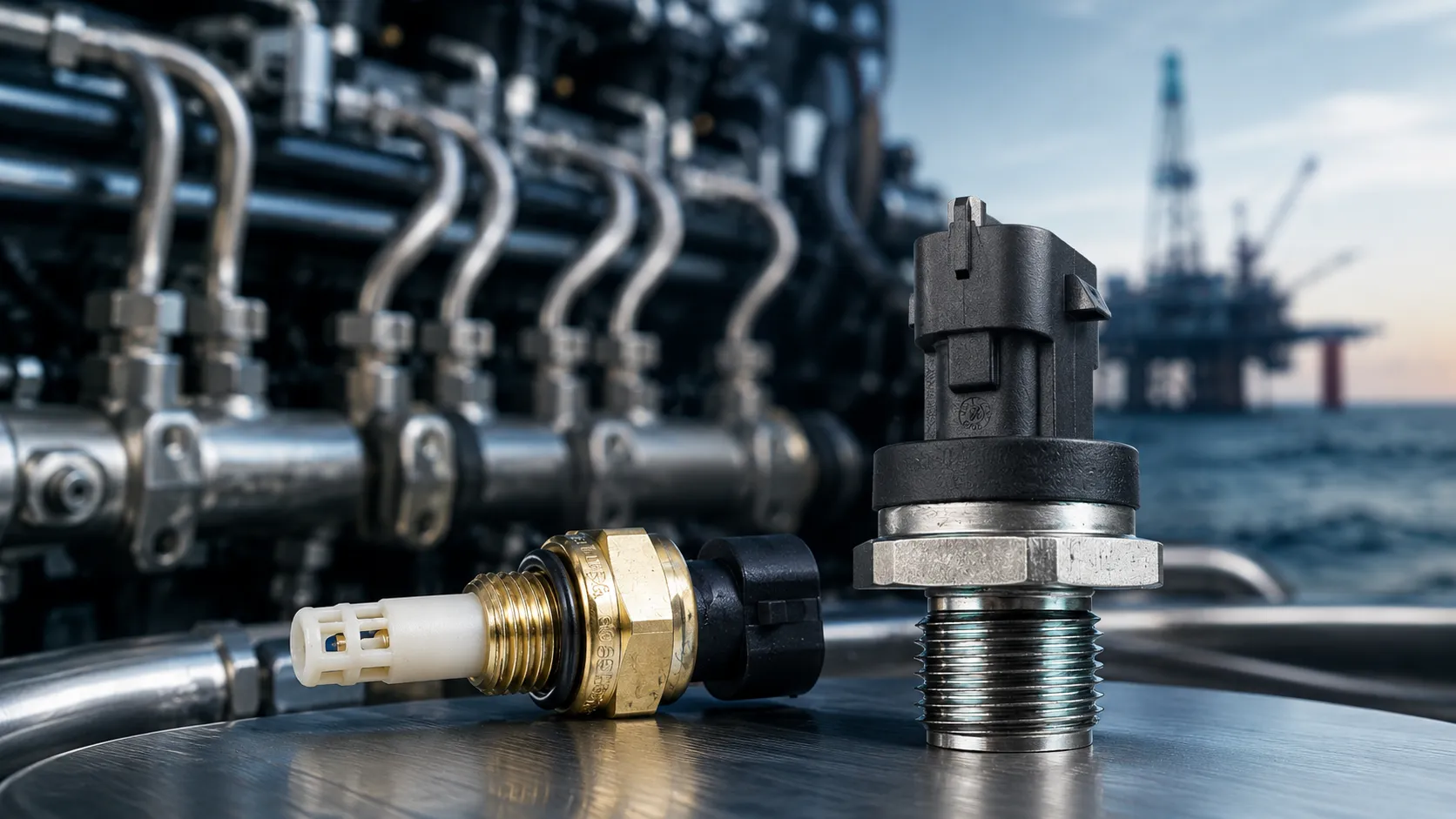
Table of Contents
Diesel generators in offshore, marine, and heavy industrial environments often work under tough conditions, from heat and humidity to vibration, salt exposure, and changing load demands. Because every setup is different, operating ratings should always be checked against the generator model, enclosure, and site requirements.
One small but important part of this system is the fuel temperature sensor. It monitors fuel temperature and sends this information to the ECU, helping the engine adjust fuel injection as fuel density and operating conditions change. When the sensor gives inaccurate readings, it may contribute to rough running, poor fuel efficiency, hard starting, warning codes, or excessive smoke. However, these issues can also come from injectors, air intake, fuel pressure, or general maintenance problems.
This guide explains how fuel temperature sensors support stable diesel engine performance, especially in demanding applications where reliability affects uptime, safety, and operating costs.
What a Fuel Temperature Sensor Does in a Diesel Engine
A fuel temperature sensor helps the engine control unit, or ECU, understand how diesel fuel is behaving before it is injected into the engine. This is important because fuel does not always behave the same way. When diesel gets warmer, it can become thinner and less dense. When it gets colder, it becomes thicker and may not flow as easily through the fuel system. These changes can affect fuel delivery, injection control, spray quality, combustion efficiency, and overall diesel engine performance.
Depending on the engine design, the fuel temperature sensor may be located in areas such as the supply pump, fuel rail, return line, or fuel filter housing. It sends temperature data to the ECU, which uses information from several sensors to manage fuel injection quantity, timing, and pressure more accurately.
This is especially useful for diesel generators, marine engines, offshore equipment, and heavy-duty machinery that operate in tough conditions. Heat, humidity, vibration, salt exposure, and long running hours can all put extra pressure on the fuel system and engine components.
Incorrect fuel temperature readings may contribute to:
- Rough idling or uneven engine performance
- Reduced fuel efficiency
- Hard starting in hot or cold conditions
- Excessive smoke or higher emissions
- Warning codes or ECU-related fault alerts
- Poor combustion due to inaccurate fuel delivery
However, these symptoms do not always mean the fuel temperature sensor is faulty. Similar issues can also come from injectors, fuel pressure problems, air intake restrictions, turbocharger faults, contaminated fuel, or general maintenance problems. That is why proper diagnosis is important before replacing any parts.
To ensure your ECU receives precise thermal data and maintains proper fuel delivery under tough operating hours, integrating durable fuel temperature sensors tailored for heavy-duty setups is essential.
How Fuel Temperature Readings Affect Diesel Engine Stability
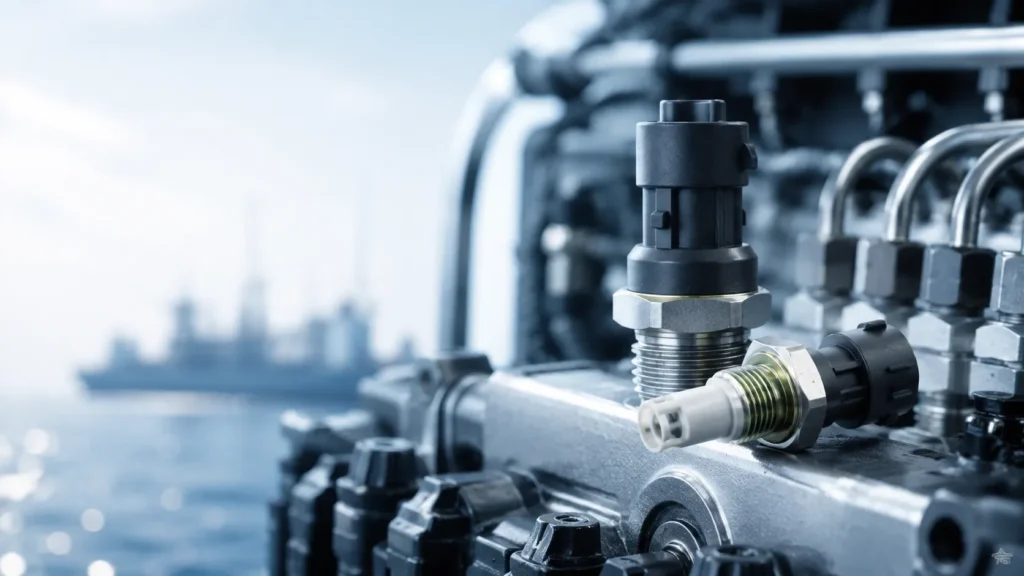
Fuel temperature readings help the ECU make better fuel delivery decisions as engine conditions change. When diesel becomes warmer or colder, its flow and injection behaviour can change too. Reliable sensor data gives the ECU a clearer picture, so it can manage injection quantity, timing, and pressure more accurately.
This matters during everyday engine operation, especially when the engine is starting, idling, accelerating, or working under heavy load. If the readings are accurate, the engine is more likely to respond smoothly and maintain steady power. If the readings are wrong or outside the expected range, the ECU may record a fault code or trigger a warning alert.
In demanding diesel applications, this early warning can help operators inspect the fuel system before small performance issues affect reliability.
Where Fuel Temperature Sensors Are Used in Diesel Fuel Systems
Fuel temperature sensor placement can vary by diesel engine design, so the exact location should always be checked against the OEM manual or parts catalogue. In many systems, the sensor may be found near the fuel rail, supply pump, return line, fuel filter housing, or tank area, depending on what the ECU needs to monitor.
Temperature range also depends on the sensor model. Bosch lists some temperature sensors used for water, fuel, or oil with a standard measuring range of -40°C to ≤+150°C. Cummins also supplies engine sensors used across fuel and temperature-related monitoring, but the exact range and fitment should be checked by engine model, part number, or engine serial number.
Integration with Cummins and Bosch Fuel System Components
Cummins offers genuine fuel temperature sensors designed specifically for their engine platforms. Bosch temperature sensors feature gold-plated terminals and materials compatible with bio-diesel applications, meeting cleanliness requirements whilst providing increased vibration resistance for heavy-duty applications.
Choosing the Right Replacement Fuel Temperature Sensor
When replacing a fuel temperature sensor, the safest approach is to match the part to the exact engine model, part number, and engine serial number. A sensor may look similar from the outside, but small differences in connector shape, thread size, resistance curve, or calibration can affect how the ECU reads fuel temperature.
For Cummins diesel engines and Bosch fuel systems, compatibility should always be checked against the OEM manual or a trusted parts catalogue before ordering. For example, Ritchmen’s fuel sensor range includes Cummins temperature-related options such as the Genuine Cummins 3085185 Fuel Temperature Sensor and Genuine Cummins 3645834 Temperature Sensor. These examples show why part-number matching matters, especially for diesel engines used in generators, marine vessels, and heavy-duty machinery.
Choosing a genuine part, OEM equivalent, or well-specified aftermarket sensor helps reduce the risk of wrong-fit parts, inaccurate readings, fault codes, and unnecessary troubleshooting after installation.
Maintenance and Troubleshooting Tips for Harsh Environments
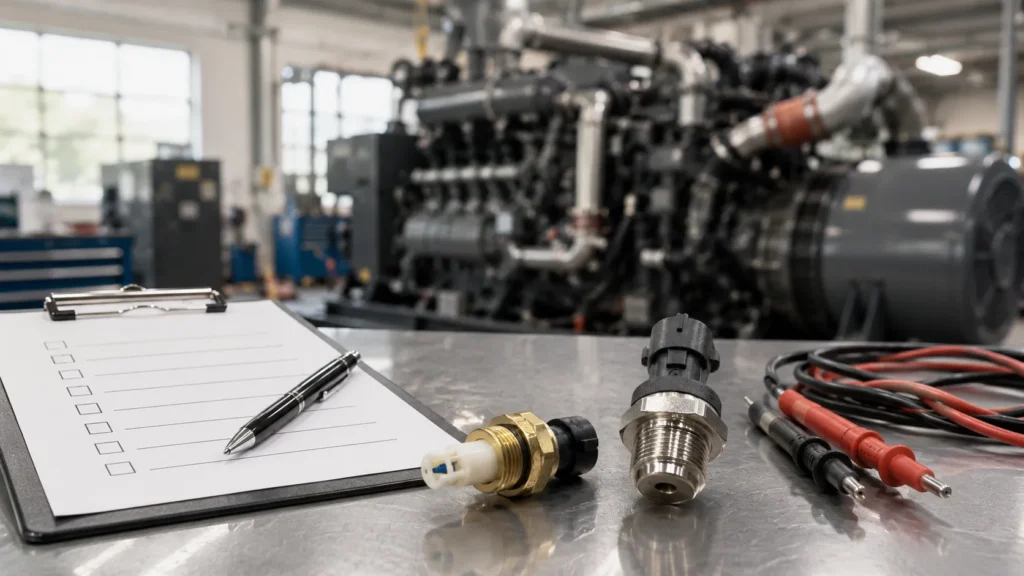
| Area to Check | What to Look For | Why It Matters |
| Sensor body | Corrosion, physical damage, dirt buildup, or fuel contamination | Harsh conditions can affect sensor accuracy and lifespan |
| Wiring and connectors | Loose pins, rubbed insulation, melted wires, corrosion, or damaged terminals | Wiring faults can look like sensor failure |
| Voltage and ground | Correct 5V reference voltage and good ground continuity | Confirms whether the sensor circuit is working properly |
| ECU reading | Fuel temperature values that do not match expected conditions | Helps identify inaccurate readings before replacing parts |
| Fuel filters | Blocked, dirty, or overdue filters | Debris and contamination can affect the wider fuel system |
| Fuel quality | Water, sludge, leaks, or contaminated fuel | Poor fuel quality can damage sensors and other fuel components |
| Repeated failures | Same fault returning after replacement | Often points to a wiring, connector, fuel quality, or system issue |
Getting the Right Fuel Temperature Sensor with Ritchmen
Choosing the right fuel temperature sensor depends on more than finding a part that looks similar. Compatibility can vary by engine model, part number, connector type, mounting position, and sensor specification.
Ritchmen supplies genuine Cummins diesel engine parts and Bosch fuel injection components, including fuel sensors used in diesel generators, marine vessels, offshore equipment, and heavy industrial engines. The team can help customers identify suitable parts based on the engine model, part number, or engine serial number.
For better accuracy, always confirm the sensor specification before ordering. This helps reduce the risk of wrong-fit parts, inaccurate ECU readings, fault codes, and unnecessary downtime. Ritchmen also supports customers with technical guidance, warranty-backed parts, international shipping, and local delivery options in Singapore, subject to stock availability.
Conclusion
Fuel temperature sensors play an important role in supporting stable diesel engine performance, especially in demanding environments such as offshore platforms, marine vessels, and heavy industrial sites. By giving the ECU accurate fuel temperature data, they help the engine manage fuel delivery more effectively as operating conditions change.
However, stable performance does not depend on the sensor alone. Correct part matching, proper installation, clean fuel, healthy wiring, and regular maintenance all matter. For operators, choosing the right fuel temperature sensor and checking it as part of routine inspections can help reduce fault codes, avoid unnecessary downtime, and support more reliable engine operation over time.
FAQs
What does a fuel temperature sensor do in a diesel engine?
A fuel temperature sensor measures the temperature of diesel fuel and sends this information to the ECU. The ECU uses this data to help manage fuel injection and support stable engine performance.
Why does fuel temperature matter in diesel engines?
Diesel fuel changes with temperature. Warm fuel can become thinner and less dense, while cold fuel can become thicker and harder to flow. These changes can affect fuel delivery, combustion quality, and engine response.
Where is a fuel temperature sensor usually located?
The location depends on the engine design. In many diesel fuel systems, the sensor may be found near the fuel rail, supply pump, return line, fuel filter housing, or tank area. Always check the OEM manual or parts catalogue for the exact location.
What are the signs of a faulty fuel temperature sensor?
Possible signs include rough idling, reduced fuel efficiency, hard starting, warning codes, excessive smoke, or uneven engine performance. However, these symptoms can also come from injectors, wiring issues, fuel pressure problems, air intake restrictions, or contaminated fuel.
Can a faulty fuel temperature sensor affect fuel efficiency?
Yes, inaccurate fuel temperature readings may affect how the ECU manages fuel delivery. This can contribute to poor fuel efficiency, although the full fuel system should be checked before replacing the sensor.